

The World Is What it Is (?)
Rachel Kushner's "Creation Lake"

Modern life is both boring and predictable. Whether we want to admit it or not, we know that Zohran Mamdani isn’t going to become mayor of New York. We also know that the current anti-ICE protests will peter out uselessly, just like the BLM protests did in 2020. As for the supposedly revolutionary working class, despite the noble savage treatment it gets from the privileged youth who call themselves the “Left,” we know that it has neither the capacity nor the ambition to launch any kind of revolution: it just wants to watch TV, shop for cheap stuff online, and raise its children in the tacky comforts of a middle-class life.
No, actually, I don’t “know” any of these things, and I don’t think anybody else does either. But I didn’t have to strain my imagination to generate these claims. They seemed to spring all too easily from an eloquent, all-knowing voice in the back of my skull. This is the voice of every once radical and now sensible member of the professional class, of the apolitical Ivy League econ majors on the brink of lucrative Wall Street careers, of the cadres of officials building policy in the higher reaches of government—in short, of the well-adjusted and successful. It’s the cynical realism of late-capitalist “common-sense” itself, backed by power and hard cash, that lives in all of us, whether we choose to claim it or contest it, similar to the realism that rings out coldly and cruely in the opening line of Naipaul’s A Bend in the River: “The world is what it is; men who are nothing, who allow themselves to become nothing, have no place in it.”
It’s also the voice of the narrator and protagonist of Rachel Kushner’s latest novel, Creation Lake, a freelance spy going by the alias Sadie Smith whom we meet en route to sabotage an anti-capitalist commune in rural France for shadowy figures we never meet.1 This “Sadie,” who talks in clipped, disaffected sentences, is contemptuous of all idealists, whether they’re charming revolutionaries or dorky romantics, and her narration as we follow her through some back-story and prep work for her assignment in the first part of the novel is studded with micro-lectures about the way the world really works, one of which is occasioned by the sight of panties snagged on branches roadside:
The real Europe is a borderless network of supply and transport. It is shrink- wrapped palettes of superpasteurized milk or powdered Nesquik or semiconductors. The real Europe is highways and nuclear power plants. It is windowless distribution warehouses, where unseen men, Polish, Moldovan, Macedonian, back up their empty trucks and load goods that they will move through a giant grid called “Europe, ” a Texas-sized parcel of which is called “France.” These men will ignore weight regulations on their loads, and safety inspections on their brakes. They will text someone at home in their ethno- national language, listen to pop music in English, and get their needs met locally, in empty lots on mountain passes.
The only mystery is where they find the women for these occasions, but even that isn’t so hard to imagine. A girl or woman fallen on hard times, not French, and without EU documents, stuck in a rural outpost, picking her way out to the main road in impractical high-heeled shoes of flesh-biting imitation leather, aloe in her purse for rapid-fire hand jobs. She had left her underwear in these woods. Big deal. Her world is full of disposability. The panties hanging on a bush in front of my face are a package of three for five euros at Carrefour. They are like Kleenex. You sweat or leak or bleed into them and then toss them on a bush, or in the trash, or you flush them and clog the plumbing, someone else’s plumbing, ideally.
I quote this passage (which went mildly viral) at length because it shows how Kushner’s novel choreographs the reader’s dance with disillusionment. In a world criss-crossed by the most complex and far-reaching financial networks and overrun by a rich foliage of media and information flows, spy and conspiracy narratives like this one allow us to inhabit a vantage point whose cool detachment is paradoxically invigorating: x-ray vision that looks through Europe into the ghostly skeleton of a “borderless network of supply and transport” underneath. Otherwise banal social facts—poor immigrants’ music habits, discounts at Carrefour—become pieces of data for sorting, dissection, and analysis. No sooner is some tantalizing piece of unmapped social terrain glimpsed (“The only mystery…”) than it’s cancelled in the bracing cold water of reason (“…but even that isn’t so hard to imagine”).

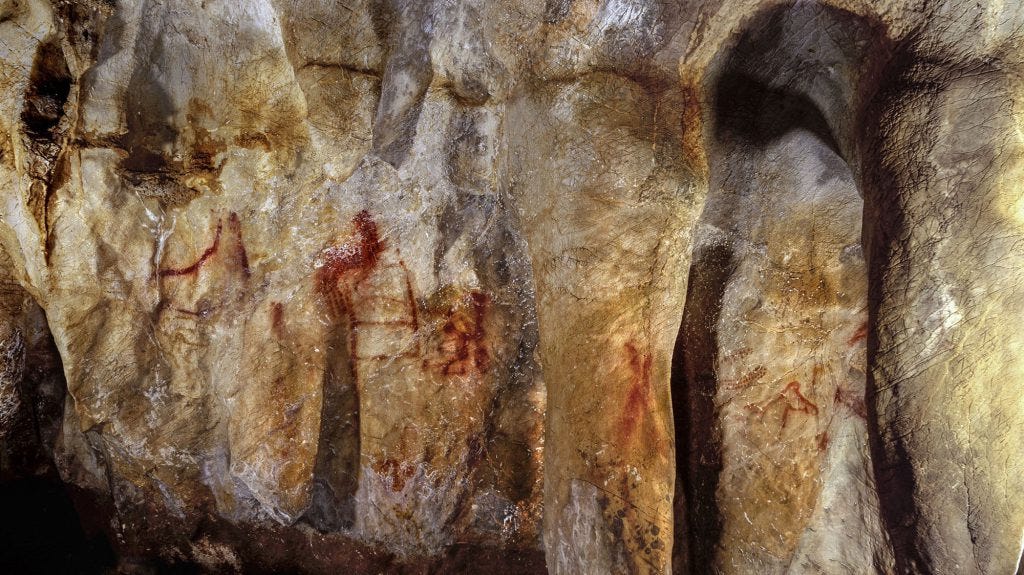
The trouble and the fun is that Sadie is full of shit. “When Sadie is going on about truck ruts and nuclear power plants being ‘the real Europe,’” Kushner notes in an interview with Jacobin, “she’s taking one strand of reality and calling it reality. She wants to think she can deromanticize everything around her, and she’s not as smart as she thinks she is.” So now we might introduce Sadie’s counterpoint, Bruno Lacombe, an old radical associated with the Situationists who’s served as a mentor/guru for Le Moulin, the commune Sadie is infiltrating. By the time the story begins, however, he’s gone to live, anprim style, in a cave in order to access a not just pre-capitalist but pre-homo sapiens way of life, having becoming obsessed with Neanderthals as an alternative, superior form of humanity whose replacement by us is the catastrophic historical turning that first set us on our disastrous trajectory.
Heady stuff! Until the infiltration plot quickens in the final act, a lot of the atmospheric electricity in Creation Lake is supposed to be generated in the alternation between Sadie’s ultra-cynical narration and her accounts (achieved through hacking) of the mystical, cosmological, and philosophical emails Bruno sends to Le Moulin from his cave. I say “supposed to be” because I can’t say this differential generates a very strong narrative charge, even though it gradually becomes clear that Sadie, vulnerable and meaning-seeking after all, is fascinated with Bruno despite herself, while, a tragic event in Bruno’s past in turn ties his psychology back into prosaic human suffering.
Meet in the middle? We’re all humans after all? I think it’s clear that this narrative resolution would be a massive letdown if it were actually to come to pass: Sadie and Bruno stripped of what makes them, as opposites, charismatic and delivered into the lukewarm soup of corny Speilberg humanism. The dyad will somehow have to be resolved in some better, some post-humanist way, and we do get something like that (maybe), but not until we’ve spent a lot of time in the space between these two lonely poles, which is also the space of Creation Lake’s plot: society itself, organizations and collectives, plans that succeed or fail, friend group drama, political activism.
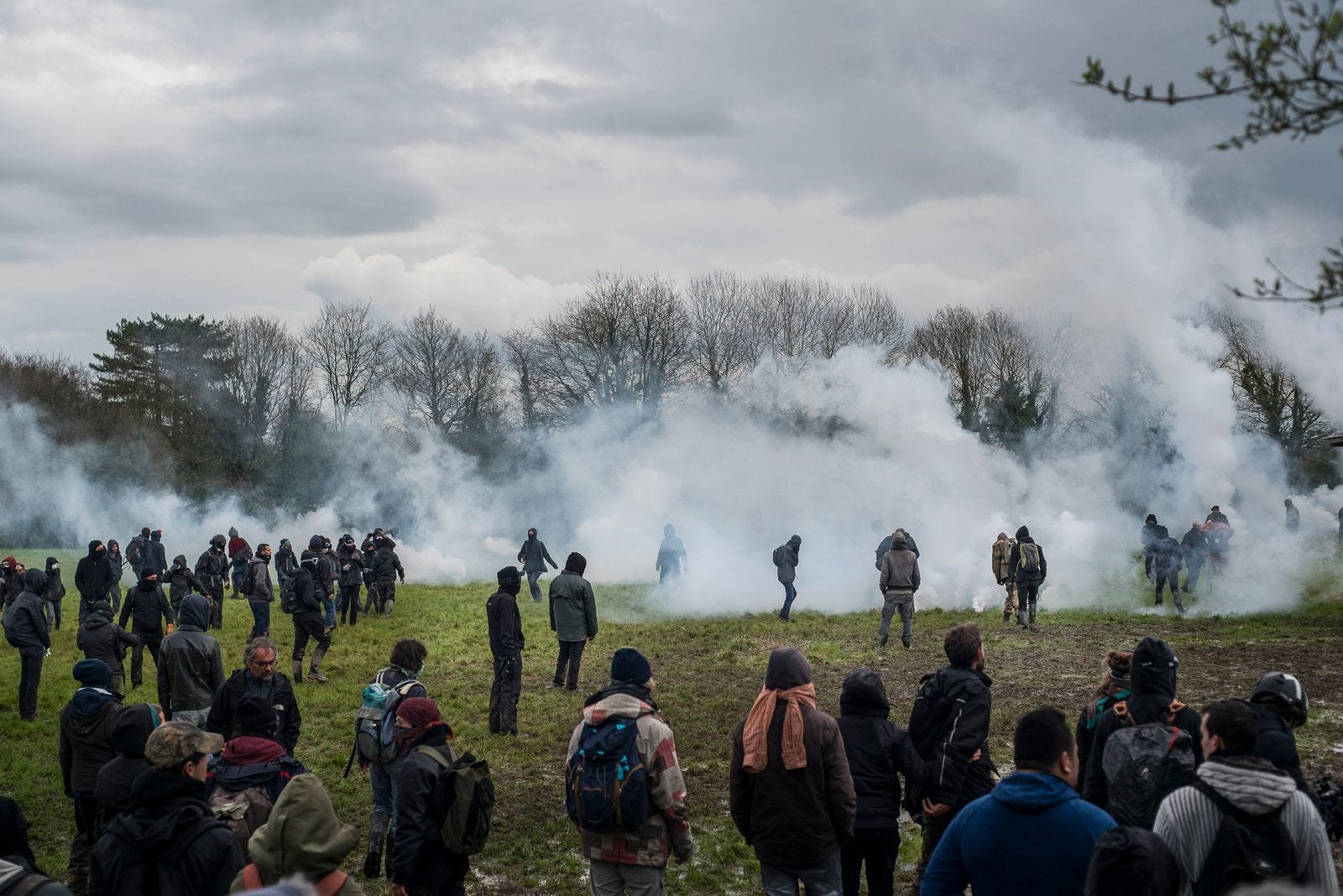
It’s this last element that seemed to especially rankle Brandon Taylor in his pan of this book for the London Review of Books, since Le Moulin and Left activism is always depicted by Sadie (therefore to us) as the dilettante project of self-aggrandizing yuppies. The contemptuous description of the wedding of a former radical, for instance: “The groom graduated from a grande école and works as an EU consultant. The bride is an assistant editor at the venerable and snobbish old publisher Gallimard.” Sadie also makes sure to note the gendered division of labour that persists on the commune and its charismatic leader’s abandonment of one of his children, a failing so expectable even Sadie seems let down by it.
For Taylor, then, this book is involved in “simultaneously vilifying and reifying the middle class,” and indeed, even if our narrator is politically prejudiced (which Taylor seems not to have grasped), it’s difficult to find traces of transcendence in the actual political manueverings we see, just more material for Sadie’s cynicism. Accepting that this cynicism is sometimes boring or at least unrewarding from a literary point of view, is transcendence after all something Kushner owes us? More from Taylor:
It’s not easy to write a realist novel about a revolutionary…. The world of the revolutionary is both dream and nightmare, filled with shadows, feints and dodges. Doublespeak and betrayals. Authorities evaded in the nick of time. Orders given through trusted comrades. Encoded maps and plans for blowing up the bridge. Setting the police car on fire. Filling the square. Demanding change. Halting the engines of state power. The eyes of the revolutionary reflect the glow of the funeral pyre of the old world, over whose ashes the new world will be built.
What’s irritating is the demand, in demoralized and demobilized times when one person in a million has access to genuinely revolutionary experience, that “political” literature should produce a portrait of revolutionary heroism, a demand that fully licenses a healthy, invigorating Sadie-ish sneer if for no other reason to prepare the ground for some more truly “realistic” rapprochement between disillusionment and mysticism.
But all this has meanwhile also intensified the dilemma of engineering this rapprochement, and Creation Lake, which like a lot of novels these days disdains climax, doesn’t so much solve this dilemma as provide hints or suggestions of a solution: it asks us not to imagine another world, but to imagine that we could imagine it. And it does this, I think, in two ways the reader is free to relate to each other or combine however they want.
History: One of the more fascinating sections in this book is an extended historical account from Bruno of an extinct ethnic group called the Cagots, wild, blue-eyed, red-haired, forest people universally scorned by feudal French society. We learn that in the late 1500s a particularly galling aristocratic outrage incited an unprecedented revolutionary alliance between the Cagots and the region’s peasants against the aristocracy, a brief dilation of historical possibilities that was then brutally repressed and drowned in blood. Of course, these Cagots were Neanderthals (and wholly invented by Kushner in case it’s not clear already), so they’re part of Bruno’s primitivism fantasy.
What’s shocking, though, is this fantasy’s seamless, naturalistic insertion into a recognizably realistic historical continuum, where they suddenly sprout a host of political associations: Europe’s gypsies or India’s dalits; the cross-class fusions of the major Western revolutions; the apocalyptic communism of Thomas Munzer’s peasant uprisings. For one tick of the historical clock a primordial human potentiality, a primitive utopianism, runs parallel with the realpolitik of power, blood, and politics. Even though the moment ends, the Cagots don’t disappear. Instead, they fall off the historical record, the map of the world as it is; and as Bruno informs us, “Cagot heritage is a secret flame that is cupped and held and protected from the wind.” So Kushner re-enchants a resolutely disenchanted world: the utopianism of the Neanderthals is released from the deep past and filters down, invisible but everywhere, into the present day, waiting for revolutionary activation.
Desire: Creation Lake’s other utopian current is linked to Sadie’s fascination with a documentary she watches that includes an interview with a sexually active nine-year-old called Franck, whose golden-boy innocence she fixates on and later projects onto a similarly-aged child in Le Moulin that she learns impregnated a teacher at the commune. Sadie’s language becomes startingly emotive whenever talking about these Francks. Here she watches the Le Moulin one, thirteen years old (!), play with his baby son:
But seeing Franck bring the baby pebbles like this task was the most important thing in the world, like his reason for being was to delight that baby, I got a feeling like envy.
Franck was involved in something pure. He loved someone totally, not because his parents said be nice to your brother, be a good big brother, be gentle, be kind, but because the child was his. There seemed enormous mystery to this arrangement, a child blessed to have an even smaller child of his own.
This bizarre, pedophilic equivalence between eroticism and innocence, however, turns out to be the key to Sadie’s character. You can actually locate the exact point in the novel where her ultra-canniness is dismantled, and it’s in a scene where she’s having sex with the asset who imagines she’s his girlfriend. “Know your worth. Know your salt. Know their salt,” she tells herself, referring to her belief that there’s a hard unchangeable core, “a four a.m. self,” inside everyone, deeper than all politics. But then a sheer wall of disgust wells up in her, and in the last line of this section, almost at the exact midpoint of Creation Lake, Sadie the capitalist, for whom everything heretofore has been transactional and rationalized, declares or realizes: “I could not come up with a number.”
So Sadie’s salt, the “substance that is pure and stubborn and consistent,” and the one thing in this novel beyond market manipulation, is desire plain and simple, desire which, amoral and inexplicable and inhuman, isn’t “political” but something even better: a seam in our rationalized reality that slightly jars the world from our representation of it, the tiniest sliver through which a different world might suddenly enter.
This commune is inspired by the real life ZAD or “zone-a-defendre” that succesfully repelled the construction of an airport near Nantes in the 2010s; we even meet a crankish character involved in that ZAD.